all-in-one-home-gym

Are All-in-One Home Gyms Worth the Money? Pros, Cons & Who Should Buy One

An all-in-one home gym can be a worthwhile investment when it matches your space, training level and exercise habits. It is not automatically the best choice for every buyer: beginners and intermediate users often benefit most, while advanced strength-focused lifters may get better long-term value from a rack, bench and free weights.

Are home multi gyms worth it?

Home multi gyms are worth it for people who want a compact, guided way to train several muscle groups without building a room full of separate equipment. They are less worthwhile for lifters whose main goal is maximum strength, barbell-based power development or unrestricted progressive loading.

The biggest advantage is convenience. A multi-gym keeps several resistance exercises in one fixed location, which can make regular training easier for busy households and people who do not want to travel to a commercial gym.

The main trade-off is freedom of movement and load progression. A traditional multi-gym has fixed stations and cable paths, so it does not replicate every movement you can perform with barbells, dumbbells, a power rack or individual machines.

A good decision starts with an honest question: will you use the machine consistently, and does it support the way you actually want to train? If the answer is yes, it can deliver more value than a technically “better” setup that takes too much space or remains unused.

When is an all-in-one gym machine worth it?

An all-in-one gym machine is worth it when you want guided exercises, full-body variety and efficient use of limited home space. It is particularly suitable for beginners, intermediate users and shared households where multiple people need different exercises and resistance levels from one machine.

You are new to resistance training

Beginners often benefit from the fixed movement paths of a traditional multi-gym because they provide structure while form and training confidence are still developing. Guided movement can reduce the chances of uncontrolled technique errors compared with attempting every exercise with free weights from day one.

This does not mean machines eliminate the need to learn good form. Seat settings, handle position, controlled repetitions and sensible resistance selection still matter, but the machine gives a clearer path for exercises such as presses, pulldowns and leg curls.

Your home has limited training space

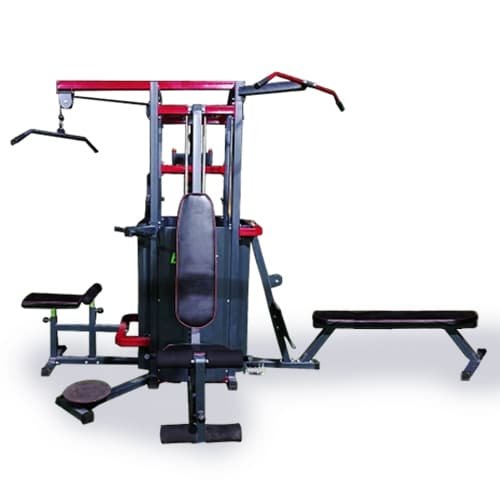
A multi station gym equipment setup can be a sensible choice for a small home gym because it combines several exercises into one footprint. Instead of needing separate machines for chest, back, arms, legs and abdominal work, one unit can cover a wider routine.

Before buying, measure the available floor space and allow room to move around the machine safely. A compact machine is only useful if it does not block doors, walkways or the practical use of the room.

More than one person will use it

A home multi-gym can work well for households where users have different fitness levels and want access to the same equipment. Adjustable resistance allows family members or partners to use the machine without each person needing their own set of equipment.

This can make a multi-gym more cost-effective than buying several individual machines. It is especially practical when one user prefers guided training while another wants a simple way to add strength work to cardio or general fitness.

You want a consistent, simple routine

An all-in-one gym machine for home use suits people who prefer a repeatable full-body routine over constantly changing workouts. Having the equipment ready in one place reduces setup time and makes it easier to complete a short session.

A multi-gym is not inherently more motivating than other equipment. Its advantage is that it removes friction: you can move from one station to another without loading a barbell, changing multiple machines or reorganising the room.


home-gym-footprint-v2


When free weights or a rack may suit better

Free weights or a power rack may be a better investment for users focused on strength, power and long-term progressive overload. They allow more natural movement patterns, can train stabiliser muscles more directly and can be expanded gradually as training needs change.

Free weights require more technique awareness and adequate space, but they offer flexibility that a fixed-path multi-gym cannot fully match. A rack, adjustable bench, barbell and plates can support squats, presses, rows, deadlifts and many variations without restricting the user to fixed stations.

You are training primarily for strength or power

Strength-focused users often prefer free weights because they can progressively load compound movements without being limited by a modest weight stack. Barbell and dumbbell exercises also require the body to control the load through space, involving stabiliser muscles that a fixed-path machine does not train in the same way.

A multi-gym can still be useful for accessory work, controlled training and general fitness. It is simply not the most direct choice for someone whose main objective is pushing long-term numbers on heavy squats, presses or pulls.

You want to build your setup gradually

A rack and free-weight setup can be more budget-flexible because it can be assembled in stages. A buyer might start with dumbbells or a bench, then add a rack, barbell, plates and accessories as their training becomes more structured.

This staged approach can offer strong long-term value, although it may take more planning and floor space. It also means the buyer is responsible for ensuring safe setup, correct technique and suitable flooring.

You are comparing a low-quality multi-gym

A low-quality multi-gym can become frustrating when its pulley and cable system is not smooth, durable or properly supported. Cables, pulleys and moving joints deserve close inspection because they are common wear points and may not receive the same warranty coverage as the main frame.

Do not choose a multi-gym only because its station count looks impressive. A well-built machine with useful stations and reliable moving parts is generally a better purchase than a larger-looking unit with weak components or exercises you will not use.

What to compare when buying an all-in-one home gym

The best all-in-one gym machine is one that fits your room, supports your routine, has suitable resistance and comes with clear warranty and installation terms. More stations, more accessories or a larger frame do not automatically make a multi-gym the right purchase.

Footprint and ceiling height

Measure both the floor area and ceiling height before buying a multi-gym. Pulley-based exercises, especially lat pulldowns, need adequate clearance above and around the machine.

Also allow space for safe entry, seat adjustment and full exercise movement. A machine squeezed against a wall may technically fit the room but still be awkward to use.

Stations and muscle coverage

Choose stations based on exercises you will actually perform, not simply the highest number printed in a product description. A useful home multi-gym should support a sensible mix of pushing, pulling, leg and core movements for the user’s goals.

For many people, a lat pulldown, chest or arm press, shoulder press, leg exercise and some core work provide practical full-body coverage. Extra stations matter only when they add movements that fit your training plan.

Resistance type

Traditional multi-gyms use different resistance systems, including weight stacks, plate-loaded systems and resistance rods. Each type changes how the machine is adjusted and how far it can progress with the user.

A weight stack uses built-in selectable weights and is convenient for quick changes between exercises. A plate-loaded machine uses separate weight plates and can suit users who already own plates, while resistance rods use flexible resistance elements rather than a conventional weight stack.

The best option is the one that gives enough resistance for your current level and expected progress. Buyers should avoid assuming that every listed kilogram or pound feels identical across different machines and exercise paths.

Warranty and moving parts

Check whether the warranty treats the frame, cables, pulleys, upholstery and labour differently. A long frame warranty is useful, but cable and pulley coverage may matter more in day-to-day use because these parts move repeatedly.

Ask what after-sales support includes and whether replacement parts are available. Fitness equipment is a long-term purchase, so support after delivery can be as important as the machine specification.

Installation and assembly

Confirm whether professional assembly is included or creates an added cost. Multi-gym installation can involve cables, pulleys, weight-stack components and alignment steps that should be completed correctly.

A poorly assembled machine may feel rough, unsafe or difficult to adjust. If the retailer provides installation support, clarify the scope before placing the order.

resistance-types

Which smart home gym is the best all-in-one option?

Smart home gyms are a separate, generally higher-end category from traditional mechanical multi-gyms. They typically combine technology-connected resistance with app-based coaching or digital workout guidance, whereas a traditional multi-gym relies on physical stations, cables and weights.

The “best” smart home gym therefore depends on whether app-led coaching and digital resistance are genuine priorities for the buyer. A smart system should not be assumed to be better simply because it is connected; it may add a price premium and may not suit someone who only needs varied full-body training at home.

For buyers considering Fitness Depot’s traditional multi-gym category, a well-built mechanical unit can cover the core requirement without smart-tech complexity: multiple exercises in one compact machine. See Multi Gyms & Benches if you have decided that this type of setup suits your space and goals.

What are the best all-in-one gym machines for home use?

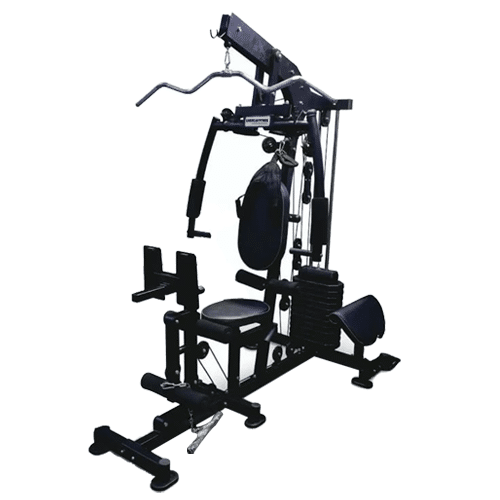
The best all-in-one gym machine for home use is one that offers exercises you will use, enough resistance for your level and a footprint that fits the room. The 7080M Home Gym is a concrete option for beginner and intermediate users who want varied full-body training from one traditional multi-gym.

The 7080M Home Gym has eight stations: Lat Pulldown, Butterfly Arm, Shoulder Press, Arm Press, Leg Curl, Vertical Knee Raise, Abdominal Bench and Punching Bag. This gives a household access to back, chest, shoulder, arm, leg, abdominal and conditioning-oriented movements within one machine.

Its adjustable load is 120 lbs (approximately 54kg), which is suitable for beginner and intermediate use. Its vinyl-leather back and seat cushioning also support a more comfortable training setup for regular home workouts.

The 7080M is listed at Rs 155,000 at the time of writing; prices may change. That is a product-specific listed price, not a general price for all all-in-one gym machines in Pakistan.

The modest resistance level is the key limitation to assess honestly. Dedicated strength-focused lifters, particularly those expecting to progress significantly on pressing, pulling or lower-body work, should compare it against heavier weight-stack machines or a rack-and-free-weights setup.

Ghar ke liye gym machine konsi behtar hai?

The best gym machine for home depends on your available space, training experience, strength goals and whether one or several people will use it. A traditional multi-gym is usually better for guided full-body training in limited space, while free weights or a rack may be better for serious strength progression.

Choose a machine with exercises you will perform consistently rather than choosing the largest unit or the most stations. Beginners and intermediate users often benefit from a multi-gym’s structured movement, while advanced users may need more load and exercise freedom.

Frequently asked questions

Are home multi gyms worth it?

Home multi gyms are worth it for beginners and intermediate users who want guided exercises, compact full-body training and a machine that several household members can use. They are less ideal for advanced strength or power-focused lifters who need unrestricted movement and higher long-term loading potential.

A multi-gym delivers value when it fits the available room and becomes part of a consistent routine. Free weights or a power rack may be the stronger long-term choice for users focused on heavy compound lifts.

What is the 3-3-3 rule in gym?

The 3-3-3 rule most commonly refers to a beginner training template of three exercises, three sets each, three days per week. A less common variation describes three strength days, three cardio days and three rest days.

Either approach can work well with an all-in-one machine because it is built around a small number of repeatable movements rather than needing a full commercial gym. The key is choosing exercises and resistance that suit your ability and progressing gradually.

Why is Gen Z so obsessed with gym?

Gen Z’s visible interest in gym culture likely reflects a mix of social-media fitness content, post-pandemic interest in accessible personal or home training, and greater openness about fitness and mental health. It is a cultural trend rather than evidence that one type of equipment suits everyone.

The increased interest has also made home-friendly equipment more relevant for people who want regular training without depending entirely on a commercial gym. The right setup still depends on space, budget, goals and how consistently it will be used.

Which smart home gym is the best all-in-one option?

A smart home gym is a technology-connected system with digital resistance and app-based coaching, while a traditional multi-gym is a mechanical station-based machine. The best option depends on whether digital coaching is worth the added cost and whether it supports your actual training habits.

For users who simply want varied, guided full-body training at home, a traditional multi-gym such as the 7080M can meet the core need without a smart-tech premium. Compare the available Multi Gyms & Benches once you have decided this format fits your goals.

Schema markup note: Publish this page with FAQPage schema for the FAQ section and BlogPosting/Article schema for the main content. Implementation should be handled separately by the developer or CMS team.

Leave a Reply

Your email address will not be published. Required fields are marked *

Related Projects