October 28, 2026
Expando
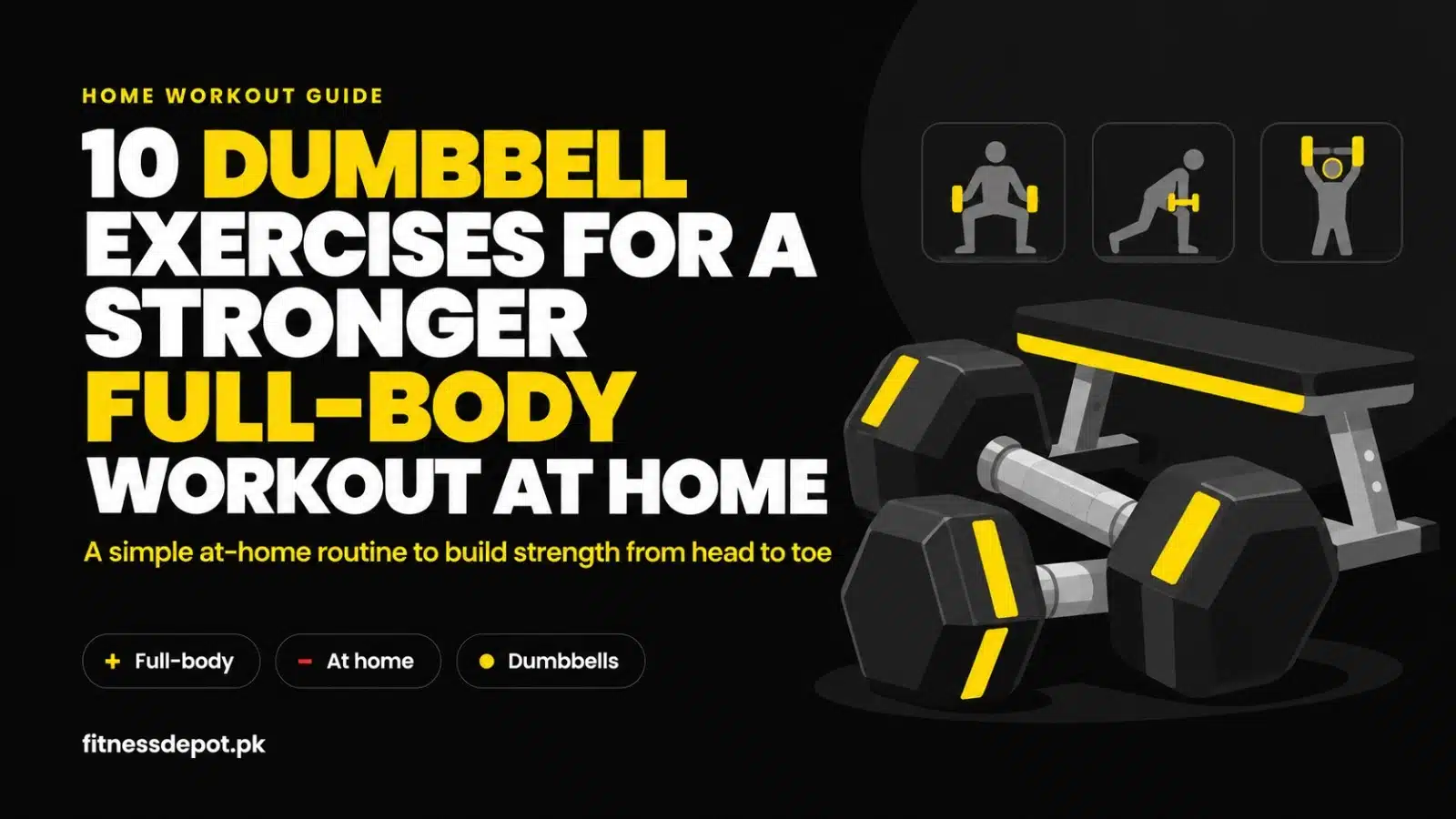
10 Dumbbell Exercises for a Stronger Full-Body Workout at Home
You don’t need a gym membership or a room full of equipment to build strength. With just a pair of dumbbells, you can train multiple muscle groups and create an effective home workout routine.
Dumbbell exercises offer a practical way to work your legs, chest, back, shoulders, arms, and core. In this guide, you’ll learn 10 dumbbell exercises, how to perform each movement correctly, and how to build a balanced dumbbell workout routine at home that suits your fitness level and available equipment.
10 Dumbbell Exercises for a Full-Body Workout
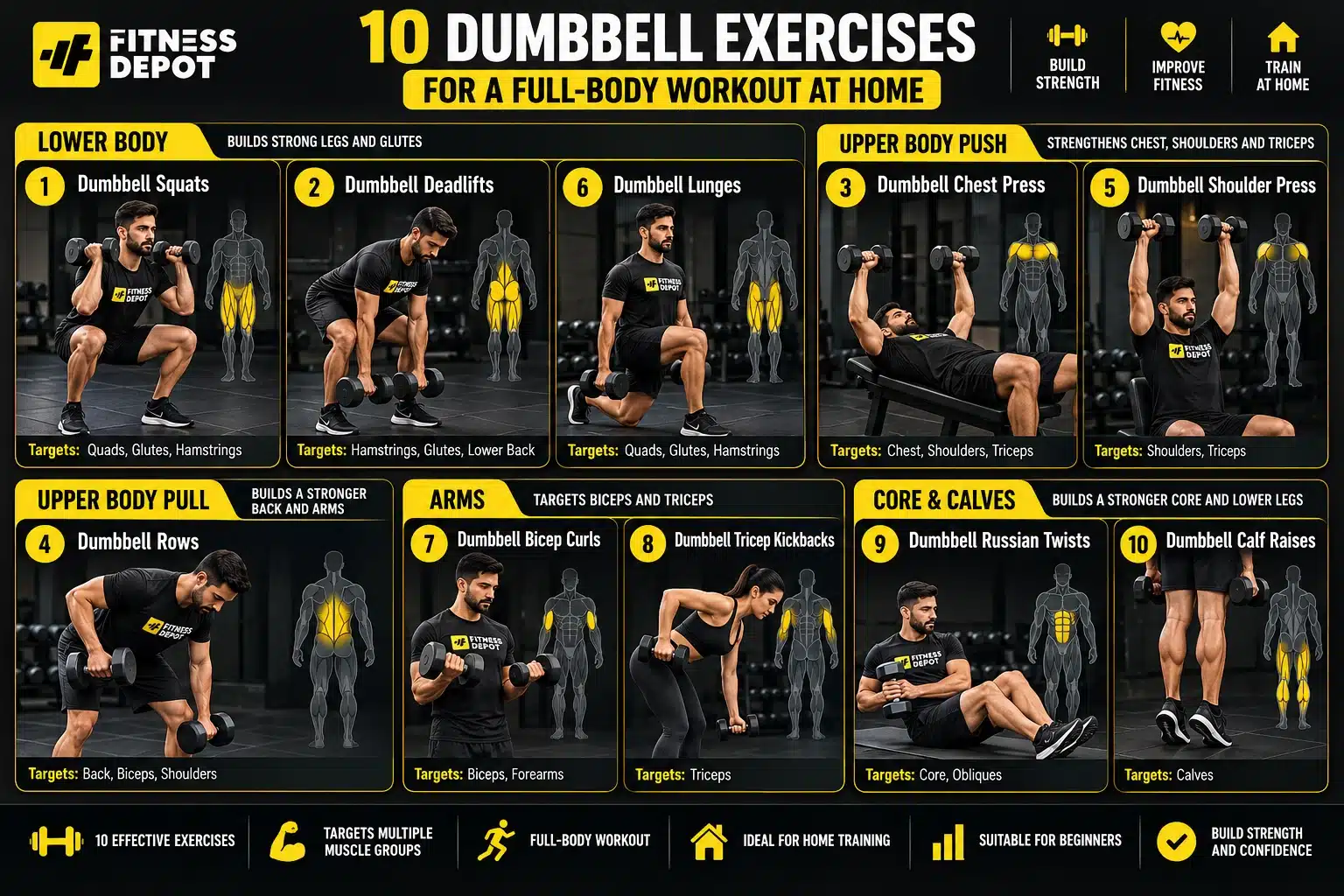
A well-rounded dumbbell workout can help you train different muscle groups in a single session. The following 10 dumbbell exercises target your legs, chest, back, shoulders, arms, and core, making them useful additions to a home workout routine. Follow the steps for each movement, maintain proper form, and choose weights that match your fitness level.
1. Dumbbell Squats
Dumbbell squats help strengthen your quadriceps, hamstrings, and glutes. They’re a useful addition to a full-body dumbbell workout at home and can be adjusted to suit your fitness level.
How to Perform:
-
Stand with your feet about shoulder-width apart, holding a dumbbell in each hand at your sides.
-
Keep your chest lifted, back neutral, and core engaged.
-
Bend your knees and push your hips back, lowering yourself into a squat as far as you can comfortably maintain good form.
-
Push through your feet to return to the starting position.
Pro Tip: Keep your knees aligned with your toes and avoid letting them collapse inward. Your knees may naturally move past your toes during a squat; focus on control, balance, and a comfortable range of motion.
2. Dumbbell Deadlifts
Dumbbell deadlifts target the hamstrings and glutes while also engaging your back and core muscles. They’re a useful addition to a full-body dumbbell workout at home.
How to Perform:
-
Stand with your feet hip-width apart, holding a dumbbell in each hand in front of your thighs, with your palms facing your body.
-
Keep your back neutral and knees slightly bent. Push your hips backward as you lower the dumbbells close to your legs, stopping when you feel a stretch in your hamstrings without rounding your back.
-
Push through your feet and bring your hips forward to return to a standing position. Keep the dumbbells close to your body throughout the movement.
Pro Tip: Focus on moving from your hips rather than squatting down. Use a manageable weight and maintain a controlled movement throughout each repetition.
3. Dumbbell Chest Press
The dumbbell chest press targets the chest muscles while also engaging the shoulders and triceps. It’s a useful upper-body exercise to include in your dumbbell workout routine at home.
How to Perform:
-
Lie on a flat exercise bench with a dumbbell in each hand. Hold the dumbbells beside your chest, with your palms facing forward.
-
Keep your feet flat on the floor and your shoulder blades gently pulled back against the bench.
-
Press the dumbbells upward until your arms are extended, without forcefully locking your elbows.
-
Slowly lower the dumbbells back toward your chest, keeping your wrists straight and elbows at a comfortable angle.
Pro Tip: Use a weight you can control throughout the movement. Avoid bouncing the dumbbells or letting your shoulders roll forward as you lower them.
Variation: If you don’t have a bench, you can perform the dumbbell chest press on the floor. For guidance on choosing a suitable bench for your workouts, read our guide to the best weight benches for home and commercial use.
4. Dumbbell Rows
Dumbbell rows target the upper back and engage the biceps, making them a useful pulling exercise in a full-body dumbbell workout.
How to Perform:
-
Place one hand and the same-side knee on a flat bench for support. Keep your other foot firmly on the floor and hold a dumbbell in your free hand.
-
Keep your back neutral and torso stable. Let the dumbbell hang beneath your shoulder with your arm extended.
-
Pull the dumbbell toward your hip, keeping your elbow close to your body and squeezing your shoulder blade gently at the top.
-
Lower the dumbbell slowly to the starting position. Complete your repetitions, then switch sides.
Key Focus: Avoid twisting your torso or rounding your back. Use a weight that allows you to control both the lifting and lowering phases.
5. Dumbbell Shoulder Press
The dumbbell shoulder press primarily targets the shoulder muscles, particularly the deltoids, while also engaging the triceps. It’s a useful upper-body movement to include in your dumbbell workout routine at home.
How to Perform:
-
Stand with your feet shoulder-width apart, holding a dumbbell in each hand at shoulder height, with your palms facing forward.
-
Keep your core engaged, back neutral, and elbows positioned slightly in front of your body.
-
Press both dumbbells overhead in a controlled movement until your arms are extended comfortably.
-
Slowly lower the dumbbells back to shoulder height and repeat.
Pro Tip: Avoid arching your lower back or using momentum to lift the weights. Start with a manageable load and keep your movements controlled throughout each repetition.
6. Dumbbell Lunges
Dumbbell lunges target the quadriceps and glutes while also engaging the hamstrings. They’re a useful addition to a full-body dumbbell workout and help train each leg individually.
How to Perform:
-
Stand upright with your feet hip-width apart, holding a dumbbell in each hand at your sides.
-
Take a controlled step forward and lower your hips until both knees bend comfortably. Your front knee should remain aligned with your foot.
-
Keep your torso upright and your core engaged as you lower yourself. Your back knee should move toward the floor without forcefully touching it.
-
Push through your front foot to return to the starting position. Repeat with the opposite leg.
Pro Tip: Start with bodyweight lunges if you’re new to the movement. Add dumbbells once you can maintain your balance and control throughout each repetition.
7. Dumbbell Bicep Curls
Dumbbell bicep curls target the biceps at the front of your upper arms. They’re a simple addition to a dumbbell workout routine at home and can help build arm strength when performed with controlled movement.
How to Perform:
-
Stand with your feet shoulder-width apart, holding a dumbbell in each hand at your sides. Keep your palms facing forward.
-
Keeping your elbows close to your torso, curl the dumbbells toward your shoulders without swinging your arms or leaning backward.
-
Pause briefly at the top, then slowly lower the dumbbells to the starting position.
Variation: Try hammer curls by keeping your palms facing each other throughout the movement. This variation also engages the brachialis and forearm muscles.
8. Dumbbell Tricep Kickbacks
Dumbbell tricep kickbacks target the triceps, the muscles at the back of your upper arms. This isolation exercise can help strengthen your arms when performed with proper form and a manageable weight.
How to Perform:
-
Hold a dumbbell in each hand and bend forward at your hips, keeping your back neutral and knees slightly bent.
-
Keep your upper arms close to your torso and bend your elbows to bring the dumbbells near your waist.
-
Keeping your upper arms still, extend your forearms backward until your arms are straight but your elbows are not forcefully locked.
-
Slowly bend your elbows to return the dumbbells to the starting position.
Pro Tip: Choose light dumbbells that allow you to keep your upper arms steady. Avoid swinging the weights or using your torso to generate momentum.
9. Dumbbell Russian Twists
Dumbbell Russian twists target the obliques, the muscles along the sides of your abdomen, while engaging your core. This exercise adds rotational movement to your home workout routine.
How to Perform:
-
Sit on the floor with your knees bent and feet planted on the ground. Hold one dumbbell with both hands in front of your chest.
-
Lean your torso back slightly while keeping your back straight and core engaged.
-
Rotate your torso slowly to one side, bringing the dumbbell with you, then rotate to the other side. Keep the movement controlled rather than swinging the weight.
Key Focus: Keep your spine neutral and rotate through your torso without rushing. If you’re a beginner, keep both feet on the floor and use a light dumbbell until you can maintain good form. Use a pain-free range of motion and stop if you feel discomfort in your lower back. Beginners can practise the movement without a dumbbell first.
10. Dumbbell Calf Raises
Dumbbell calf raises target the calf muscles at the back of your lower legs. They’re a simple way to add lower-leg strengthening to your dumbbell workout routine at home.
How to Perform:
-
Stand upright with your feet hip-width apart, holding a dumbbell in each hand at your sides.
-
Keep your core engaged and raise your heels off the floor, pushing through the balls of your feet.
-
Pause briefly at the top, squeezing your calf muscles.
-
Slowly lower your heels back to the floor and repeat the movement with control.
Pro Tip: Use a wall or sturdy support for balance if needed. Keep your ankles aligned and avoid bouncing at the bottom of each repetition. To increase the range of motion, you can perform the exercise on a stable step, provided you can maintain your balance safely.
How to Build a Dumbbell Workout Routine at Home
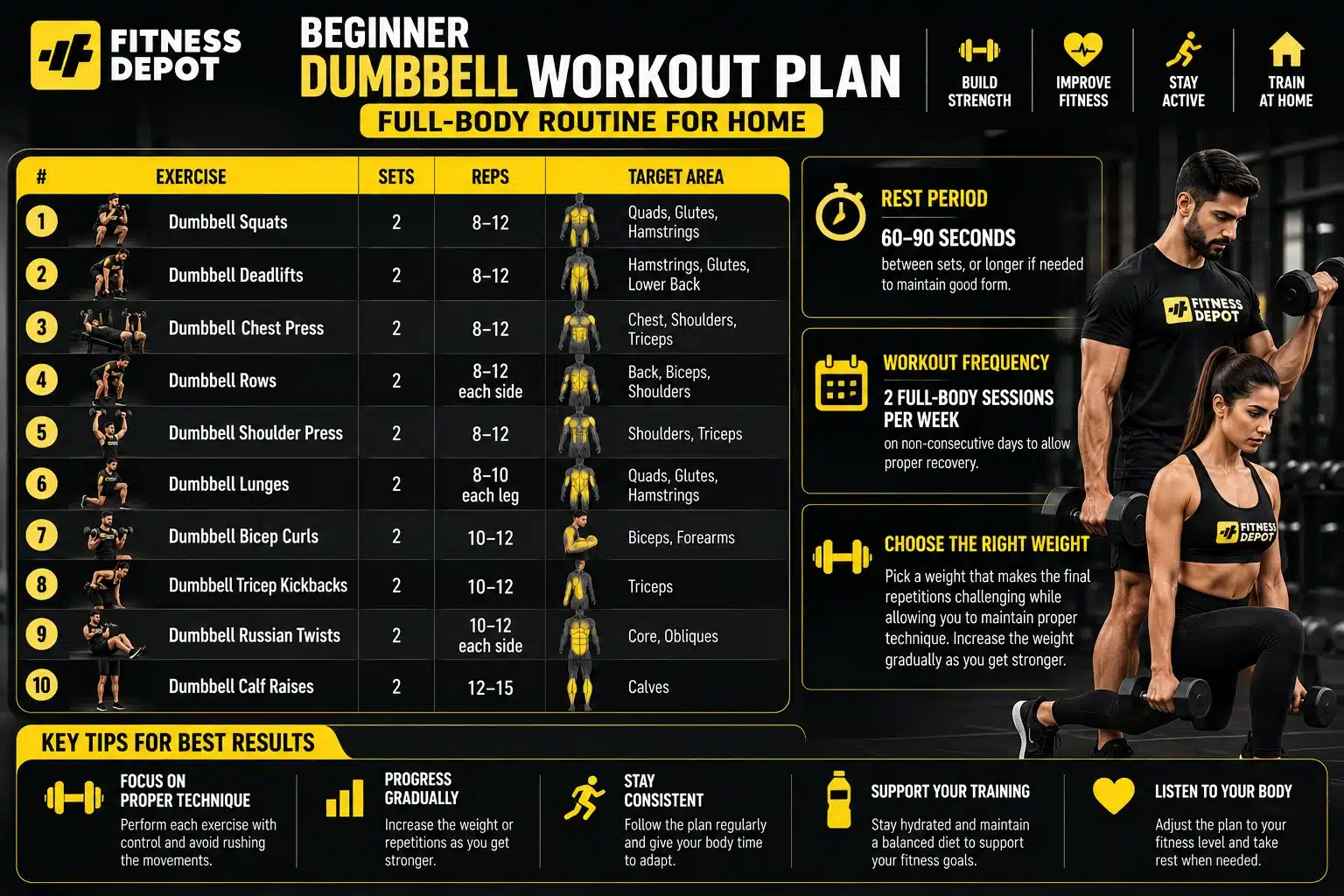
You can turn these 10 dumbbell exercises into a full-body workout by choosing a manageable weight, following a consistent exercise order, and allowing enough rest between sets. If you’re new to strength training, begin with fewer sets and focus on learning each movement before increasing the workload.
Beginner Dumbbell Workout Plan
| Exercise | Sets | Repetitions |
|---|---|---|
| Dumbbell Squats | 2 | 8–12 |
| Dumbbell Deadlifts | 2 | 8–12 |
| Dumbbell Chest Press | 2 | 8–12 |
| Dumbbell Rows | 2 | 8–12 per side |
| Dumbbell Shoulder Press | 2 | 8–12 |
| Dumbbell Lunges | 2 | 8–10 per leg |
| Dumbbell Bicep Curls | 2 | 10–12 |
| Dumbbell Tricep Kickbacks | 2 | 10–12 |
| Dumbbell Russian Twists | 2 | 10–12 per side |
| Dumbbell Calf Raises | 2 | 12–15 |
Rest for around 60–90 seconds between sets, or longer if you need time to recover and maintain good form. These are suggested starting points, not fixed requirements. Reduce the repetitions or use lighter weights if you cannot complete them with control.
If completing all 10 exercises feels too demanding at first, begin with 4–6 exercises per session and build up gradually as your fitness, technique, and recovery improve.
How Often Should You Follow This Workout?
Start with two full-body sessions per week on non-consecutive days, leaving time for recovery between workouts. As your strength, technique, and recovery improve, you can adjust your schedule gradually. You do not need to perform every exercise at maximum effort in every session.
How to Choose the Right Dumbbell Weight
Choose a weight that makes the final repetitions challenging while allowing you to maintain proper technique. If you need to swing the weights, arch your back excessively, or shorten the movement to finish a set, reduce the load.
As an exercise becomes easier, first aim to complete the prescribed repetitions with consistent form. You can then increase the weight gradually. If you need help choosing equipment for home training, see our guide to choosing the best adjustable dumbbell set.
Dumbbell workout se pehle warm up kaise karein?
A good warm up prepares your muscles and joints before you lift. Spend a few minutes on light movement like marching in place, arm circles, hip circles and bodyweight squats.
Then do your first set of each exercise with a lighter dumbbell, and add weight only when your form feels smooth. Stop and rest if you feel sharp pain.
Start Building Your Dumbbell Workout Routine
You can build a practical home workout routine with these 10 dumbbell exercises by focusing on proper technique, choosing manageable weights, and progressing gradually as your strength improves. Start with a routine that matches your fitness level, allow time for recovery, and increase the challenge only when you can perform each movement with control.
Consistency matters more than trying to do everything at once. Use the workout plan above as a starting point, adjust it to your needs, and build your strength one session at a time.
Frequently Asked Questions
1. What Is the Most Effective Dumbbell Exercise?
Dumbbell squats, deadlifts, chest presses, and rows are among the most effective exercises because they target major muscle groups. The best exercise depends on your fitness goals, as a balanced routine provides more complete strength development.
2. What Is a Good Dumbbell Workout Plan for Home?
A good home dumbbell workout includes squats, deadlifts, chest presses, rows, shoulder presses, lunges, bicep curls, tricep kickbacks, Russian twists, and calf raises. Beginners can start with 2 sets of 8–12 repetitions per exercise, adjusting the weight and repetitions to maintain proper form.
3. How Many Sets and Reps Should I Do for Dumbbell Exercises?
Beginners can start with 2 sets of 8–12 repetitions for most dumbbell exercises. For movements such as calf raises, 12–15 repetitions may be suitable; choose a weight that challenges you without compromising your technique.
4. How Often Should I Do Dumbbell Exercises?
Beginners can start with two full-body dumbbell workouts per week on non-consecutive days to allow time for recovery. As strength and fitness improve, you can gradually adjust your training frequency and workload.
5. What Size Dumbbells Should Beginners Use?
Beginners should choose dumbbells that feel manageable while making the final repetitions challenging without affecting proper form. If you need to swing the weights or arch your back excessively, choose lighter dumbbells; increase the weight gradually as the exercises become easier.
6. Can I Use Dumbbells for Weight Loss?
Dumbbell exercises can support weight loss by helping you build muscle and stay physically active. However, weight loss also depends on your overall calorie intake, diet, and regular physical activity.