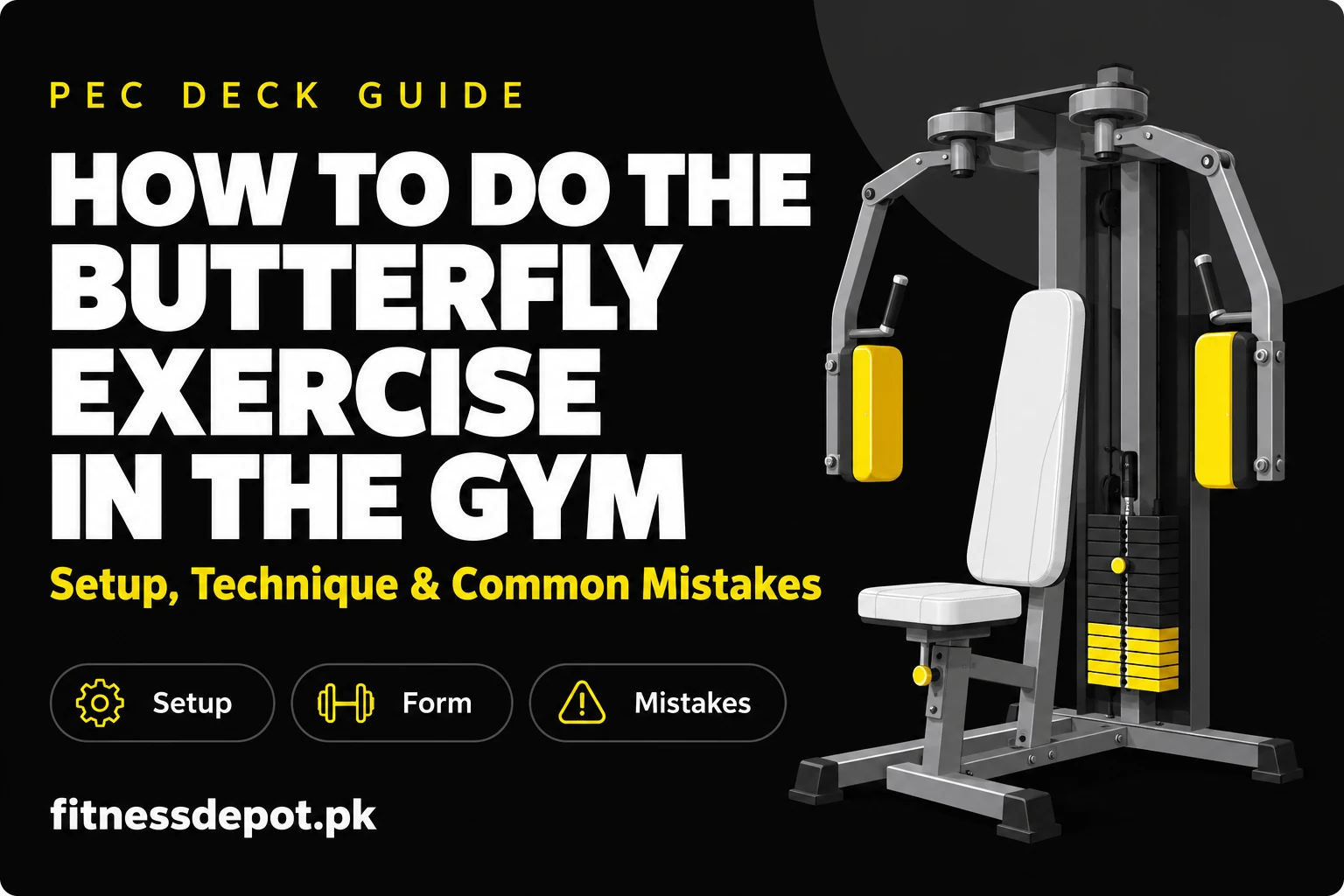
Pec Deck Guide Setup and Form

How to Do the Butterfly Exercise in the Gym (Pec Deck Guide)


The butterfly exercise in the gym is a seated chest fly on a pec deck machine. Adjust the seat and starting position, sit with your back supported and feet stable, then bring the handles or arm pads together in front of your chest under control. Let them return without forcing your shoulders into a deep stretch. Machine designs vary, so use the instructions on your station and a range you can control.

What is the butterfly exercise in the gym?

The butterfly, also called a pec deck or machine chest fly, moves the upper arms toward each other against resistance while you sit at a machine. It mainly trains the chest muscles (pectorals). The American Council on Exercise (ACE) included the pec deck in its chest-exercise research, but that measurement does not promise a particular result for every person. [ACE chest exercise research]

Check which way the station is meant to work. For the chest fly, you face forward with your back supported and close the arms in front of your chest. A reverse fly opens the arms outward and is a different exercise emphasizing the back of the shoulders and upper back. A floor-based butterfly stretch is unrelated to this machine movement. [ACE reverse fly exercise library]

How do you set up the butterfly machine?

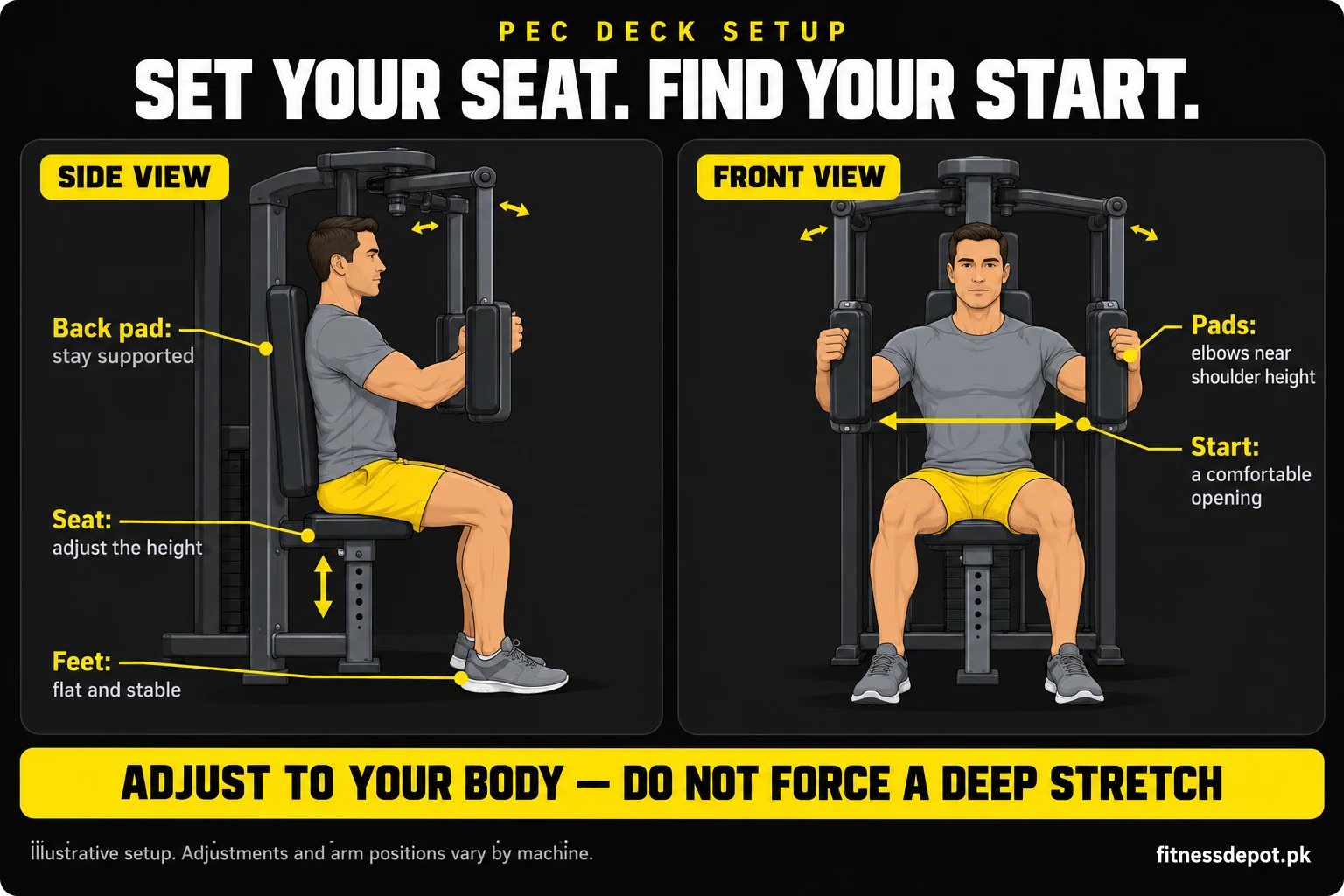
Set the machine to fit your seated position and shoulder comfort before selecting resistance. The aim is a supported chest fly, not the widest possible arm opening. On a forearm-pad pec deck, ACE describes feet flat, the back against the pad and the elbows resting against the centers of the rotating pads; handle-based designs require a different grip and adjustment. [ACE chest exercise research]

Setup checklist

  • Identify the chest-fly position on the machine placard. If a dual-purpose station also offers a reverse fly, check the seat orientation and lever setting before starting.
  • Adjust the seat so the handles or arm pads line up comfortably around chest height as intended by the machine. Sit with your upper back supported, feet firmly placed and shoulders relaxed.
  • If the machine has a start-position adjustment, choose an opening that lets you hold the arms without shoulder pain or a forced stretch. Do not copy another person’s setting; check the model’s instructions.
  • Select a resistance you can move smoothly while keeping your back against the pad. Try the first movement slowly and readjust if the arms feel misaligned or the stack pulls you into an uncomfortable position.

Seated Pec Deck Setup Guide

How to do the butterfly exercise correctly

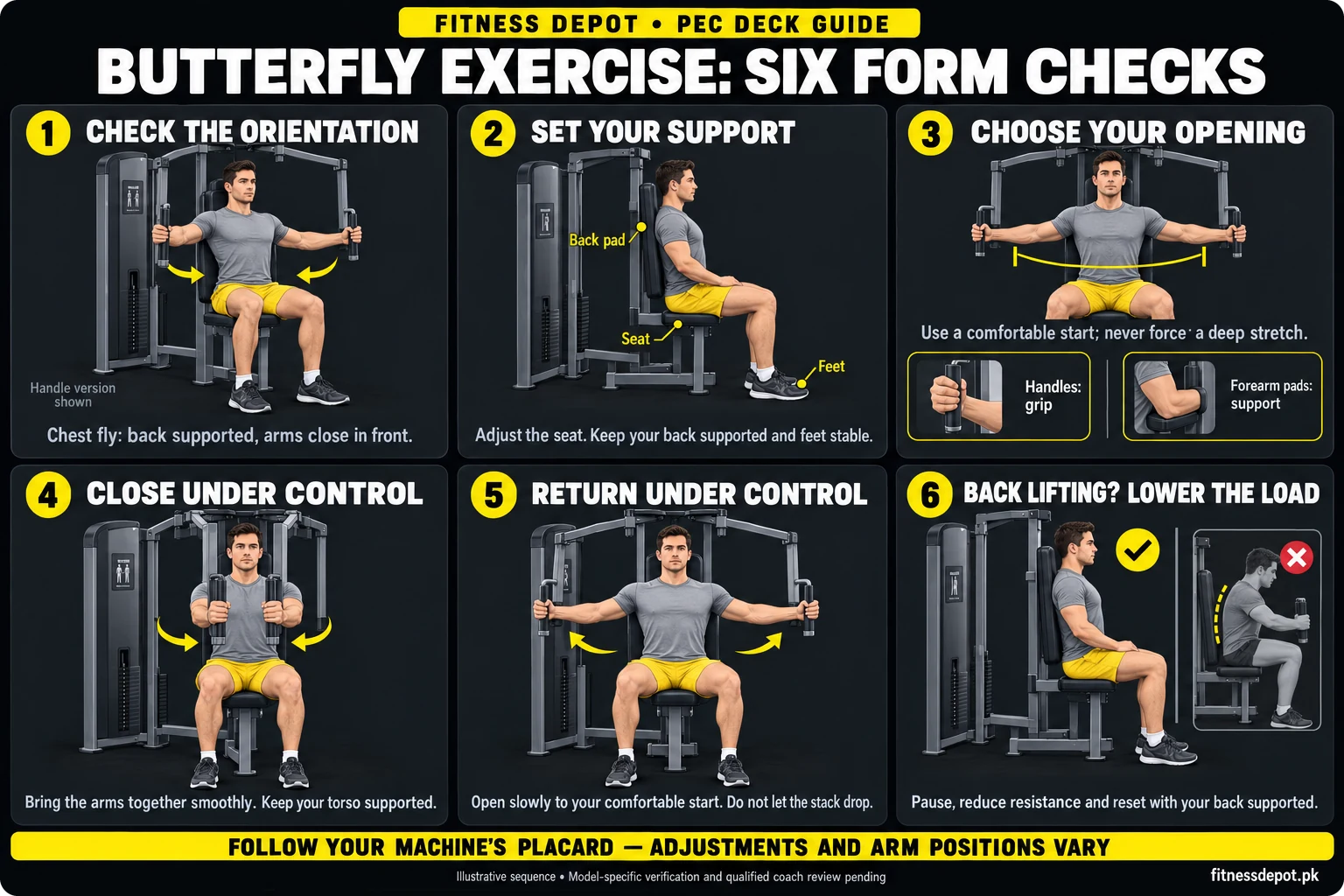
Once the setup feels stable, close the arms in a smooth arc and control the return. Keep the resistance manageable enough that you can repeat the same path without throwing your torso forward. ACE specifically cautions that excessive loading can cause users to lift the upper back from the pad or cut the movement short. [ACE chest exercise research]

  • Start seated with your back in contact with the support, feet stable and hands on the handles or forearms placed on the pads, as your machine requires. Keep a comfortable bend at the elbows rather than locking them straight.
  • Bring your upper arms toward each other in front of your chest. Move deliberately; do not jerk the handles or try to finish by lunging your chest away from the backrest.
  • Stop at the machine’s natural closing point or a point you can reach without twisting, shrugging or losing back contact. There is no need to force the handles past each other.
  • Let the arms open gradually until you return to the comfortable start position. Keep control of the resistance instead of letting the machine pull your shoulders backward.
  • Continue only while you can maintain the same controlled form. Breathe naturally rather than holding your breath; pause and reset if your position shifts.
  • You should feel the chest working through a controlled movement. A sharp pain, pinching sensation or a forced shoulder stretch is a reason to stop and reassess the setup. If discomfort persists or you have a shoulder injury, ask a qualified professional for individual guidance rather than pushing through it. ACE flags special caution for people with a history of shoulder dysfunction on the traditional pec deck. [ACE chest exercise research]

Butterfly Exercise Six Pec Deck Form Checks

Common butterfly machine mistakes and quick fixes

Most form problems are visible in your posture or in the return movement. Use this check after a light practice repetition and adjust the station before adding resistance.

Mistake: Your upper back lifts from the pad as you close. Fix: Reduce the resistance and keep the torso supported; ACE identifies this as a common sign of excessive loading. [ACE chest exercise research]

Mistake: The machine pulls your arms far behind your torso or you force a deep stretch. Fix: Move the start setting forward if available and shorten the opening to a comfortable, controlled range. ACE warns about shoulder stress in an exaggerated start position. [ACE chest exercise research]

Mistake: The arms snap back or the weight stack drops. Fix: Guide the opening phase as deliberately as the closing phase and lower the resistance if you cannot control it.

Mistake: The seat puts the handles or pads awkwardly high or low. Fix: Readjust the seat and test the arm path without straining; follow the particular station’s placard rather than assuming every pec deck aligns identically.

Mistake: You turn around and open the handles while expecting a chest fly. Fix: Identify whether you have selected a reverse-fly setting. Use the back-supported, inward-closing configuration for the chest movement.

How to adapt the exercise to your machine and comfort

Butterfly machines can use forearm pads, handgrips or a convertible chest-fly/reverse-fly arrangement. On a pad version, position the forearms or elbows as the machine instructs and bring the pads inward; on a handle version, grip the handles and follow the machine’s intended arm path. The seat, lever and start adjustments may differ, so the station placard takes priority over a generic picture.

If you cannot sit with stable feet and back support or reach the handles without discomfort, ask gym staff to show the available adjustment or choose another chest exercise suited to you. Avoid treating a painful range as a flexibility target. Stop for sharp pain; a trainer can help with technique, while a healthcare professional can advise on an injury or persistent symptoms.

The quick form check

Set the seat and comfortable start position, keep the back supported, close the arms smoothly, and control the return. If you are comparing equipment for a home or commercial gym in Pakistan, see Fitness Depot’s butterfly machine guide for setup and buying factors. [Fitness Depot butterfly machine guide]

Frequently asked questions

Is butterfly for chest or back?

The standard butterfly or pec deck chest fly closes the arms in front of the body and mainly trains the chest. A reverse-fly configuration opens the arms outward and shifts the emphasis toward the back of the shoulders and upper back. Check the station’s exercise label and your facing direction before you begin. [ACE chest exercise research] [ACE reverse fly exercise library]

Leave a Reply

Your email address will not be published. Required fields are marked *

Related Projects